


The Body
The physical reserve that lets you sustain effort, recover, and bring enough energy to the rest of your life and leadership.
The Methodology
Leaders rarely fail for lack of intelligence, ambition, or work ethic. They fail because something underneath those things was never built.
Think about the last time you reacted in a way you later regretted. You probably knew better. You may even have known better in the moment. That is what makes it sting. Almost nothing in leadership development addresses what actually happened there. We teach models and frameworks — the what. The failure is almost never in the what. There are two layers underneath it, and a complete development arc has to build both.
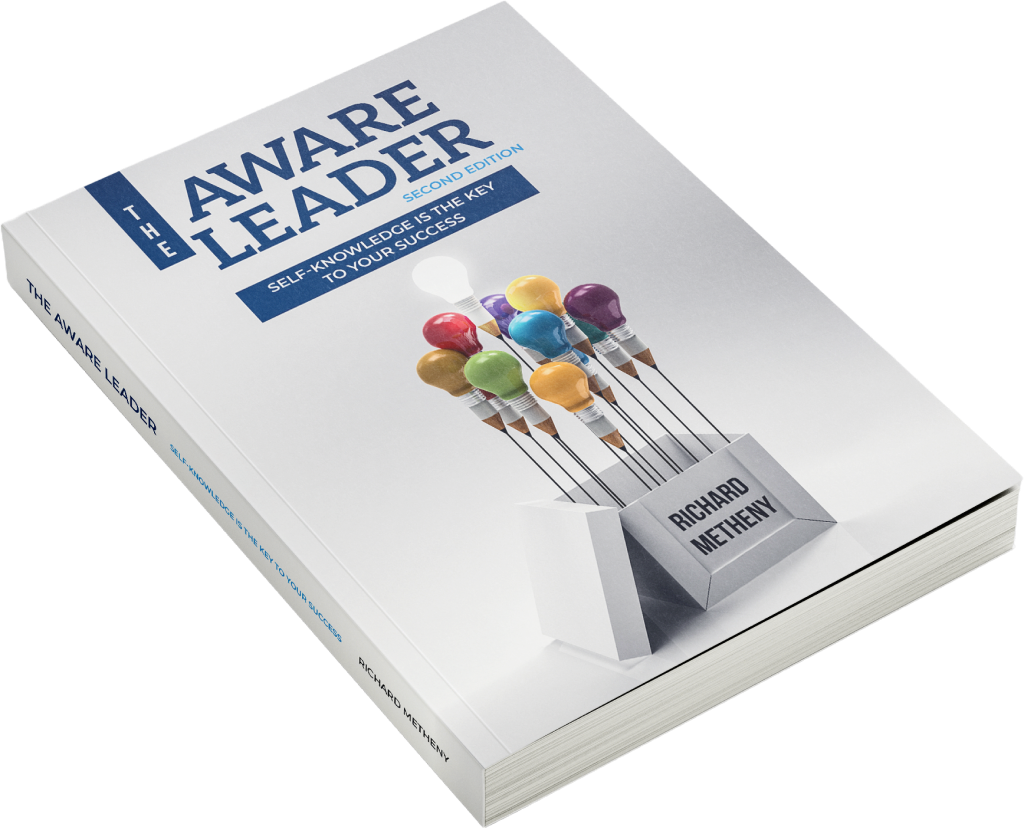
Layer One
Self-awareness is who you actually are when no one is coaching you. Your default patterns under pressure. The behaviors that got you here and quietly stopped working. The distance between how you mean to land and how you actually land.
Without it, every skill you build steers you faster in the wrong direction. That’s the part people miss — development without self-awareness doesn’t stall. It accelerates the drift.
Layer Two
Capacity is the renewable ability to meet demand: to bring enough stamina, emotional steadiness, focused attention, and purpose to what your life and your leadership are asking of you now.
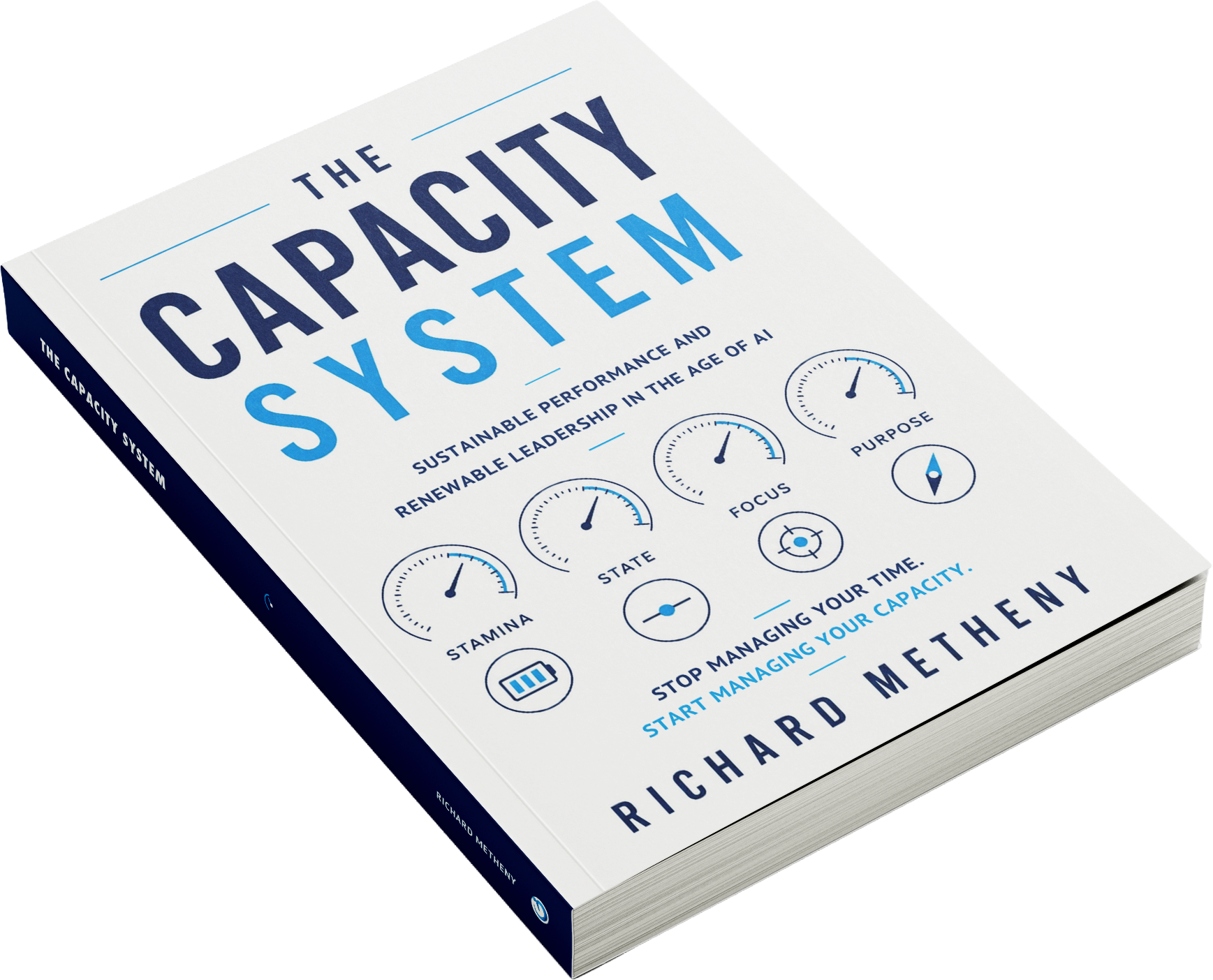
The physical reserve that lets you sustain effort, recover, and bring enough energy to the rest of your life and leadership.
The emotional steadiness to hold perspective, stay relational, and choose your response when pressure rises.
The ability to protect your attention and direct your best energy toward the work that matters most.
The ability to align your energy with your values, your meaning, and the contribution worth making.
Self-awareness without capacity is consciousness without sustainability. You see clearly, and you still burn out. Capacity without self-awareness is sustainable averageness. You keep going, smoothly, in the wrong direction.
Together they produce leadership that compounds instead of depleting.“People do not rise to the level of their calendars. They rise or fall to the level of their capacity.”
“Most of what we call a time problem, a discipline problem, or a people problem is a capacity problem wearing a disguise.”
Capacity is a system, not a mood.
Capacity is not a feeling to manage. It is a system that leaks. And most leaks are not personal discipline problems — they are design problems.
You cannot ritualize your way out of a system that chronically violates your capacity. Another morning routine will not fix a calendar built to defeat you. The work is naming the leaks, then redesigning the system that keeps producing them.
This is not a model assembled from the literature. It came out of more than 9,000 hours in the room with leaders, and it is expressed as a defined methodology rather than a set of opinions.
The Capacity Assessment is a self-reflection tool, not a diagnostic. We have not yet validated it through formal research, and we do not make claims about outcomes we have not earned.

A methodology that lives in a book is a methodology you have to remember. Both layers are built into The Aware Leader app — the assessments, the guided path, and an AI Coach grounded in your own data and calibrated to your level.
It is not generic AI for leaders. It is this methodology,